Exxon Mobil (XOM) stands as one of the most influential energy companies in the world. With a legacy dating back over 150 years and a footprint that spans the global oil and gas landscape, it commands investor attention not just for its massive scale but for its role in shaping energy markets, dividends, and long-term returns. In this detailed analysis, we’ll explore why XOM stock remains a top watchlist pick, examine its financials, market drivers, risks, and its potential for investors in the years ahead.
1. What Is XOM Stock? — Exxon Mobil in the Modern Energy Sector
Exxon Mobil Corporation is an integrated energy company involved in the exploration, production, refining, and sale of crude oil, natural gas, petroleum products, and chemicals. It also invests in emerging low-carbon technologies such as carbon capture and hydrogen fuels. As of 2026, XOM trades on the NYSE under the ticker XOM, attracting both income and value investors due to its scale, dividend history, and market position.
2. XOM Stock Snapshot: Price, Valuation, and Market Context
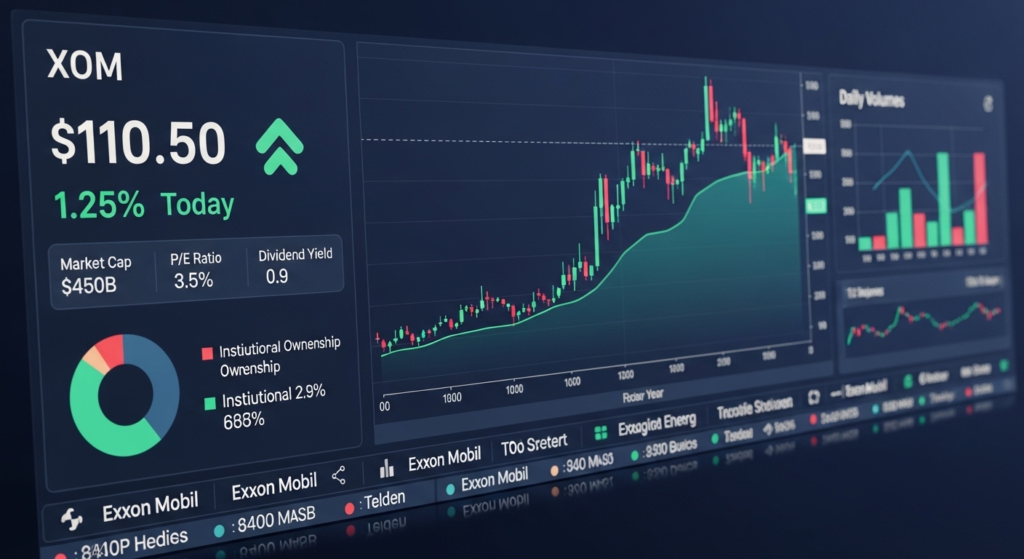
| Metric | Value |
|---|---|
| Market Cap | ~$622.9 billion |
| Price (approx.) | $149 per share |
| 52-Week Range | $97.80 – $159.61 |
| P/E Ratio (TTM) | ~22.2 |
| Dividend Yield | ~2.7% |
| EPS (TTM) | ~$6.7 |
| Forward P/E | ~22.6 |
Why These Numbers Matter
- Valuation: A P/E ratio above 20 reflects the market’s expectation of steady long-term earnings, especially for capital-intensive energy companies.
- Dividend Yield: With nearly three decades of consecutive dividend increases, Exxon remains a favorite for income-focused portfolios.
3. Exxon’s Business Model: More Than Just Oil
Exxon operates through multiple integrated segments that together form a resilient business model:
Upstream
Exploration and production of oil and gas worldwide, including key regions like the Permian Basin (U.S.) and Guyana, where production growth continues to impress.
Product Solutions
This segment refines crude into gasoline, diesel, and jet fuel and produces petrochemicals used in plastics and industrial applications.
Low Carbon Solutions
Exxon’s growing business in carbon capture, storage (CCS), and hydrogen positions it at the intersection of traditional energy and environmental transition efforts.
Specialty Products
This unit focuses on high-margin materials and advanced lubricants, making Exxon’s revenue base more diversified.
This diversified structure helps balance the business across volatile commodity markets, ensuring stable earnings even in downturns.
4. Financial Performance and Strength of XOM Stock
Recent Earnings Highlights
- Exxon reported approximately $28.8 billion in net income for 2025, with $52 billion in operating cash flow.
- EPS (earnings per share) was about $6.70 TTM, demonstrating strong profitability despite volatile oil prices.
Cash Flow and Capital Allocation
Exxon consistently generates free cash flow, allowing for shareholder dividends and buybacks. The company returned over $9 billion to shareholders in one quarter through dividends and share repurchases. These robust cash flows support ongoing operations and investor returns.
5. Dividend Profile: Income You Can Count On
Dividends are a hallmark of XOM stock:
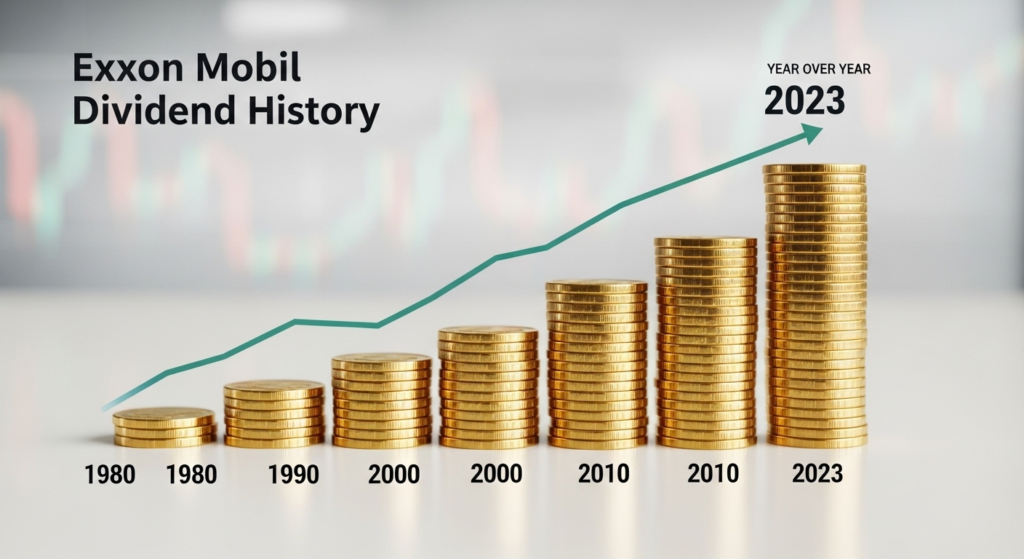
- Exxon has increased dividends for over 40 consecutive years, a rare feat among S&P 500 companies.
- The current yield of around 2.7% is competitive within the energy sector.
- Dividend growth, supported by robust cash flows, attracts long-term investors in search of reliable passive income.
6. Market Drivers: What Moves XOM Stock?
Several macroeconomic and industry-specific factors influence XOM stock:
Oil and Gas Prices
Crude price fluctuations directly impact Exxon’s upstream profits. Periods of oil above $70-$80 per barrel typically boost earnings and free cash flow.
Global Geopolitics
Tensions in the Middle East and disruptions in the Strait of Hormuz can constrain supply routes and lift energy prices, benefiting major producers like Exxon.
Demand Shifts
Despite the global energy transition, oil demand is projected to stay above 100 million barrels per day through 2050, while natural gas demand is expected to rise by over 20% by the same period.
Environmental Policy and Transition
Exxon’s investment in low-carbon solutions and carbon capture places it in the crosshairs of energy policy debates, impacting its ESG profile and investment appeal.
7. Strategic Growth and Long-Term Vision
Exxon’s forward strategy is a major factor in its stock potential:
2030 Earnings and Cash Flow Targets
The company aims to increase earnings and free cash flow significantly by 2030, reflecting growth from both existing operations and new technologies.
Upstream Expansion
Exxon plans to increase production to approximately 5.5 million oil-equivalent barrels per day by 2030, focusing on high-margin projects in the Permian Basin and Guyana.
Low-Carbon and Technology Initiatives
Investments in carbon capture, hydrogen fuel, and emission intensity reductions balance traditional hydrocarbon profits with future-facing business lines.
8. XOM Stock vs Competitors: How It Stacks Up
| Company | Dividend Yield | Market Cap | Growth Focus |
|---|---|---|---|
| Exxon Mobil (XOM) | ~2.7% | ~$622.9B | Strong upstream + low carbon |
| Chevron (CVX) | 3.0% | ~$300B+ | Dividend-focused with E&P growth |
| Shell (SHEL) | Varies | ~$150B+ | Downstream and renewable pivot |
| TotalEnergies (TTE) | Varies | ~$150B+ | Broad energy mix |
Exxon’s integrated model delivers more diversified revenue streams and often steadier returns than peers.
9. Risks to Consider Before Investing in XOM Stock
Commodity Price Volatility
Falling oil or natural gas prices can reduce profit margins, affecting earnings and stock value.
Regulatory and Policy Uncertainty
Environmental regulations and carbon policies could limit conventional fuel profitability.
Operational Challenges
Large-scale projects, geopolitical disruptions, or maintenance downtime may impose financial pressures.
Understanding these risks helps investors align XOM stock with their portfolios and risk tolerance.
10. Investment Thesis: Is XOM Stock Right for You?
Long-Term Holders
- Dividend reliability and strong cash flows make XOM attractive for income investors.
- Strategic growth plans could support future earnings and valuation expansion.
Value Investors
- Competitive P/E ratios and a strong asset base may indicate undervaluation during market dips.
Risk-Tolerant Traders
- Geopolitical events or oil price fluctuations can create short-term trading opportunities.
Conclusion: The Bottom Line on XOM Stock
XOM stock stands at an intersection of traditional energy strength and future growth ambitions. With decades of stable cash generation, a strong dividend history, and strategic investments in both core energy and low-carbon technologies, Exxon Mobil remains a cornerstone holding for many portfolios. Understanding its financials, market position, and risk factors helps investors make informed decisions.
FAQs
Q: Does Exxon Mobil increase dividends regularly?
A: Yes — Exxon has increased dividends for over 40 consecutive years, making it a reliable income stock.
Q: Is XOM a growth stock?
A: XOM is primarily a value and income stock, with growth potential tied to production expansion and cost efficiencies.
Q: What forces most affect Exxon’s stock price?
A: Oil and gas price fluctuations, global demand trends, and geopolitical events often drive short-term price movements.