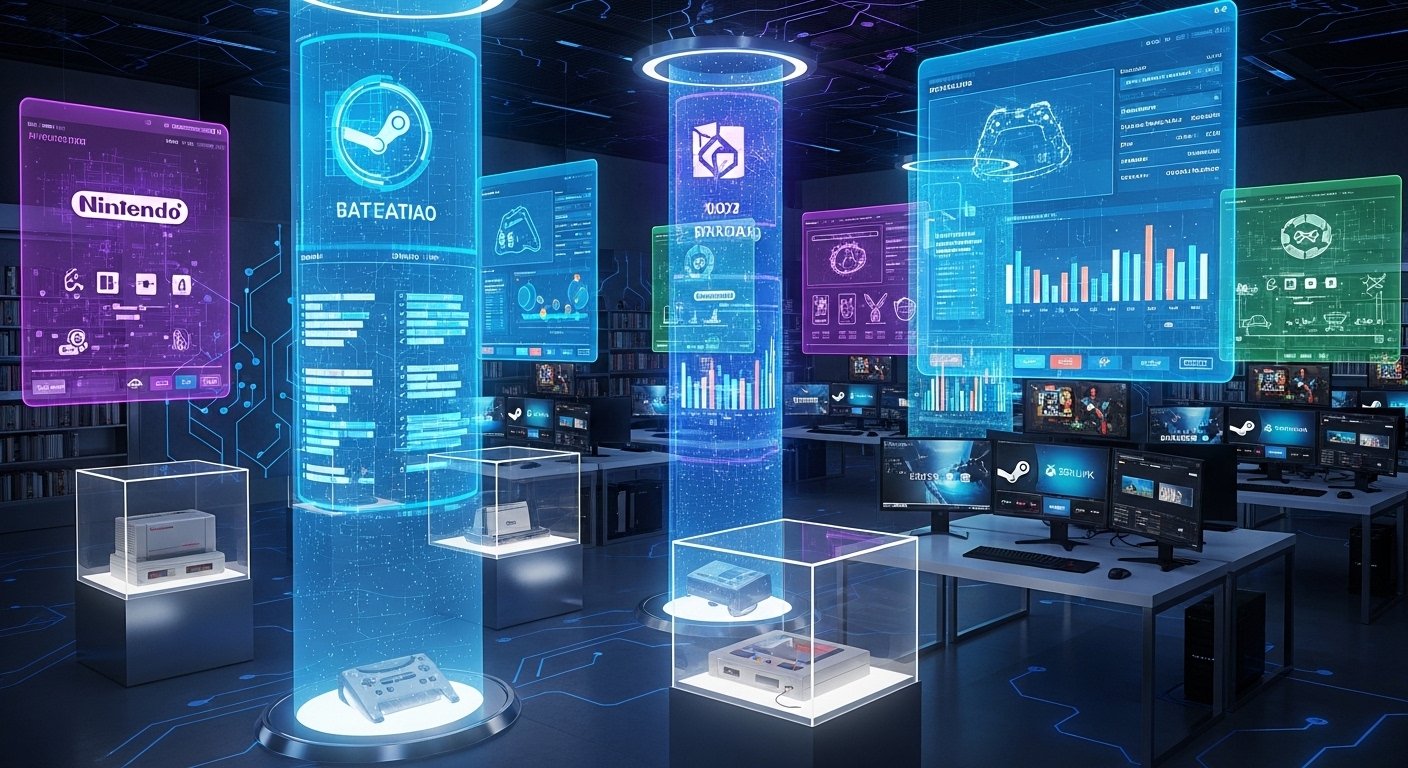
The phrase “updates thegamearchives” has become increasingly relevant in discussions about digital preservation and gaming history. As the video game industry evolves, so does the need to preserve not only the games themselves but also the updates, patches, development materials, and historical context surrounding them.
In 2026, TheGameArchives updates represent more than a simple website refresh or interface redesign. Instead, they reflect a broader transformation in how gaming history is documented, stored, and verified. These improvements focus on metadata accuracy, file verification, search reliability, and long-term digital preservation.
Modern games are no longer static products. They change through patches, downloadable content, regional releases, and online services. Without careful archival efforts, entire versions of games—and even their development history—could disappear permanently.
Today, a growing ecosystem of archivists, nonprofit organizations, developers, and gaming communities is working together to ensure that gaming culture remains accessible to future generations.
This article explores the most important updates thegamearchives initiatives, how modern gaming archives function, and why these changes matter for players, researchers, and historians alike.
What “Updates TheGameArchives” Means in 2026
The term updates thegamearchives no longer refers to a single platform or repository. Instead, it describes a network of digital preservation projects focused on safeguarding video game history.
These efforts involve:
- Online game archives
- Nonprofit preservation initiatives
- Community-driven archiving projects
- Digital libraries and research databases
Together, these systems form an ecosystem dedicated to protecting the cultural and technical legacy of video games.
From Simple Game Storage to Structured Digital Archives
In the early days of internet archiving, many game preservation projects were relatively simple. Enthusiasts uploaded files to forums, peer-to-peer networks, or personal websites. While these collections helped preserve some content, they often suffered from several problems:
- Missing metadata
- Incomplete game versions
- Corrupted files
- Duplicate entries
- Unverified downloads
As the gaming industry expanded, these limitations became increasingly problematic. Modern archives now rely on structured digital preservation systems designed to maintain accuracy, reliability, and accessibility.
Key improvements include:
- standardized metadata
- automated file verification
- version tracking systems
- improved search algorithms
These developments represent the foundation of the latest updates thegamearchives initiatives.
The Modern Game Preservation Ecosystem
Preserving video game history requires collaboration between multiple groups. Today’s preservation ecosystem includes nonprofit organizations, digital archivists, gaming historians, and technical experts.
One of the most influential groups in this field is the Video Game History Foundation. Founded to document and preserve gaming culture, the organization has built one of the most important digital collections of video game development materials.
Modern preservation projects focus on more than just playable games. They also archive materials such as:
- game design documents
- early prototypes
- development notes
- marketing assets
- concept art
- press kits
By preserving both the games and their surrounding context, archives help researchers understand how games were created, marketed, and experienced at the time of release.
Why Game Archives Must Continuously Update
Unlike older forms of media, video games evolve after release. Updates, patches, and online services constantly modify how games function.
For example, modern games often change through:
- balance patches
- downloadable expansions
- bug fixes
- online events
- seasonal content
If these updates are not preserved, the historical record of the game becomes incomplete.
A game released in 2012 might play very differently today compared to its original launch version. Archiving every revision ensures that future researchers can study how the game evolved over time.
This is one of the most important motivations behind ongoing updates thegamearchives projects.

Major Infrastructure Improvements in TheGameArchives
The most significant progress in modern game preservation comes from improvements in archive infrastructure. These updates focus on ensuring that stored content remains accurate, searchable, and verifiable.
Metadata Standardization
Metadata is the information that describes archived content. Without accurate metadata, even the most extensive archive becomes difficult to navigate.
Recent updates thegamearchives systems have introduced structured metadata frameworks that improve cataloging and discoverability.
Common metadata fields now include:
| Metadata Field | Purpose |
|---|---|
| Release Year | Tracks historical timeline |
| Platform | Identifies console or PC system |
| Region | Records localized releases |
| Version Number | Documents patches and revisions |
| Publisher | Credits the publishing company |
These standardized fields help eliminate duplicate entries while ensuring that users can quickly locate the correct version of a game.
For example, a game released in multiple regions may have different versions depending on language, censorship laws, or bug fixes. Proper metadata allows archives to document these differences accurately.
Automated File Verification and Checksum Systems
One of the biggest challenges in digital archiving is maintaining file integrity. Even a small corruption in a game file can render it unusable.
To address this problem, modern archives use checksum verification systems. A checksum is a unique digital fingerprint assigned to a file.
When a file is uploaded or downloaded, the archive compares its checksum to the original record. If the values do not match, the file is flagged as corrupted.
These verification systems allow archives to:
- detect corrupted files
- merge duplicates
- identify modified versions
- confirm authenticity
Preservation groups also test archived files using emulation tools such as RPCS3 to ensure compatibility with preserved systems.
This process helps guarantee that archived games remain playable and accurate.
Search Accuracy and Advanced Filtering
Another important improvement introduced by updates thegamearchives infrastructure involves search functionality.
Earlier archive systems often returned irrelevant or incomplete results. Modern archives now include advanced filtering systems designed to improve discovery.
Users can now filter searches by:
- platform
- release year
- region
- version number
- developer or publisher
These tools dramatically improve archive usability, especially for researchers studying specific versions of a game.
Security, HTTPS, and Archive Credibility
Security improvements are another major focus of archive updates. Because archives host large collections of files, they must protect both users and stored data.
Modern archive platforms now implement:
- HTTPS encryption
- spam detection systems
- upload verification processes
- user authentication safeguards
These features protect archives from malicious uploads while ensuring that users can safely access preserved content.
Major Preservation Projects Connected to TheGameArchives Updates
Several major preservation projects highlight the importance of modern updates thegamearchives initiatives.
Digital Library Expansion for Gaming History
The digital library developed by the Video Game History Foundation represents one of the most ambitious efforts to document gaming culture.
Unlike traditional archives focused on playable titles, this library preserves the development history behind games.
Its collection includes:
- early design documents
- production notes and drafts
- promotional materials
- developer correspondence
- concept artwork
These materials offer valuable insights into the creative processes behind some of the most influential games ever produced.
Researchers studying gaming history rely heavily on these resources to understand how the industry evolved over time.
PlayStation 3 Patch Preservation Efforts
Preserving software updates is another critical aspect of gaming archives.
The PlayStation 3 era saw the widespread adoption of downloadable patches. While these updates improved gameplay, they also created a preservation challenge.
If official servers eventually shut down, many patches could disappear permanently.
To prevent this loss, archivists have begun collecting and documenting PS3 update files. These efforts include:
- downloading official patches
- cataloging revision histories
- verifying compatibility with emulators
By preserving these updates, archives ensure that future players can experience games as they existed after post-launch improvements.
Multiplayer and Online Service Preservation
Online gaming introduces another preservation challenge. Multiplayer experiences depend on servers that may eventually shut down.
Archivists are documenting online environments before they disappear by preserving:
- server configurations
- multiplayer rulesets
- gameplay recordings
- network behaviors
These records help historians understand how online communities interacted within specific games.
Game-Specific Archive Activity in 2026
Certain games and platforms have become focal points for preservation activity.
Community Discussions Around “The Archives” in Doors
The popular Roblox horror game Doors includes an in-game location known as The Archives, which has sparked speculation within the community.
Players believe the area may contain hidden lore and narrative content related to the game’s story.
This highlights an interesting trend: archives are increasingly becoming interactive spaces inside games themselves.
Rather than existing purely as external databases, archives may appear as explorable environments that contain lore, documents, and historical context.
Subscription Archives and Space Engineers
Another preservation topic involves subscription-based libraries.
The sandbox engineering game Space Engineers has appeared in rotating subscription catalogs such as Xbox Game Pass.
While subscription services increase accessibility, they do not guarantee permanent availability. Licensing agreements can change, causing games to disappear from these catalogs.
This temporary access model reinforces the importance of independent archives.

Expanding Internal Archives in RiffTrax The Game
The party title RiffTrax The Game continues expanding its internal content archive.
Recent updates have added:
- new movie clips
- additional gameplay modes
- expanded platform support
The game is now playable across multiple platforms, including the Nintendo Switch.
This model demonstrates how modern games can maintain active content archives within the game itself.
Platform-Level Changes Affecting Game Archives
Industry shifts also influence how games are preserved and accessed.
PlayStation Plus Library Changes
Subscription services play a major role in modern gaming distribution.
The service PlayStation Plus provides access to rotating game catalogs. However, these libraries change frequently based on licensing agreements.
Because of this, subscription services cannot function as permanent archives.
Games available today may disappear tomorrow.
The Transition Away From PS4 Monthly Additions
The gradual shift away from older console libraries also affects preservation.
While the PlayStation 4 remains widely used, newer platforms increasingly dominate subscription services and digital marketplaces.
As focus shifts toward newer hardware generations, archivists must ensure that older titles remain accessible.
Why Updates TheGameArchives Matter for Gaming History
The importance of updates thegamearchives efforts extends beyond nostalgia.
These initiatives help preserve an entire cultural medium.
Protecting Gaming History
Video games are now one of the largest entertainment industries in the world.
According to global market research, the gaming industry generated over $180 billion in annual revenue in recent years, surpassing both film and music industries combined.
Without preservation efforts, large portions of this cultural history could disappear.
Benefits for Researchers and Journalists
Game archives provide valuable resources for academics and journalists studying digital media.
Researchers use archive data to analyze:
- game design trends
- technological innovation
- cultural impact
- player behavior
These insights contribute to academic studies in media history, sociology, and technology.
Benefits for Players and Gaming Communities
Preservation efforts also benefit gamers themselves.
Archives allow players to:
- rediscover classic titles
- revisit discontinued content
- study the evolution of favorite games
- explore development history
For gaming communities, archives act as cultural memory.
Challenges Game Archives Still Face
Despite major improvements, preservation efforts still face significant challenges.
Online-Only Games
Many modern games rely entirely on servers.
If those servers shut down, the game becomes unplayable.
Examples include:
- multiplayer-only shooters
- online role-playing games
- live-service titles
Preserving these experiences requires documenting gameplay rather than simply storing files.
Legal and Licensing Barriers
Copyright laws also complicate preservation efforts.
Many game publishers maintain strict control over their intellectual property. Archivists must navigate complex legal frameworks when preserving software.
Massive Storage Requirements
Modern games often exceed 100 gigabytes in size, and updates can add dozens of additional gigabytes.
Maintaining large archives requires substantial storage infrastructure and funding.
The Future of TheGameArchives and Game Preservation
Looking ahead, preservation technology continues to evolve.
AI and Automated Archiving Tools
Artificial intelligence may eventually help automate several archiving tasks.
Potential applications include:
- automatic metadata tagging
- patch detection
- version comparison
- archive indexing
These tools could significantly accelerate preservation work.

Collaborative Community Preservation
Community contributions remain essential.
Players and modders frequently help archives by:
- documenting patch histories
- recording gameplay
- preserving development information
These collaborative efforts strengthen the preservation ecosystem.
Toward a Global Game Preservation Network
Experts increasingly envision a future where game archives operate as a global network.
In this model:
- nonprofit archives
- academic institutions
- museums
- community projects
would share data and coordinate preservation strategies.
Such collaboration could ensure that video game history remains accessible for generations.
Key Takeaways About Updates TheGameArchives
- Modern archives focus on structured digital preservation.
- Metadata systems ensure accurate cataloging of games and updates.
- File verification tools maintain archive reliability.
- Community archivists play a critical role in preservation efforts.
- Subscription services cannot replace independent archives.
- Gaming history requires ongoing preservation as technology evolves.
Frequently Asked Questions
What are updates thegamearchives?
The phrase updates thegamearchives refers to improvements in video game archive infrastructure, including metadata standardization, file verification systems, and expanded preservation initiatives.
Do archive updates remove old games?
No. Archive updates typically remove corrupted files or merge duplicate entries while preserving verified historical content.
Why is metadata important for game archives?
Metadata helps identify correct versions of games, improves search accuracy, and ensures that archives document release history accurately.
Are archived games always playable?
Not always. Some archives focus on documenting development history or preserving files rather than providing playable versions.
Will future games be easier to archive?
Archiving tools are improving, but online-dependent games still pose challenges. Preservation will likely remain an ongoing effort.